
Is Lifting Making You More Stressed? The Truth About Cortisol


Is Lifting Making You More Stressed? The Truth About Strength Training and Cortisol
There’s a version of this conversation that goes badly.
Woman in her 40s, already stretched thin - work, family, not enough sleep - starts lifting because she’s heard it’s good for her. A few weeks in, she’s exhausted, her sleep is worse, and she feels wired and flat at the same time.
“Maybe exercise isn’t for me,” she thinks.
But here’s what’s actually going on. And here’s how to get this right.
The Cortisol Paradox
Strength training is a stressor. Full stop. When you lift, your body raises cortisol - that’s not a bug, it’s a feature. Cortisol mobilises energy, supports your stress response, and is part of how your body adapts to physical challenge.
The session ends. Cortisol should return to baseline. Your body recovers, adapts, and comes back a little stronger.
That’s the normal cycle. And when it’s working, the long-term picture looks really good.
What Consistent Training Does to Your Stress Response
Over time, with regular strength work and solid recovery, your nervous system becomes less reactive. You’re repeatedly exposing it to controlled physical stress and then recovering well from it - and your body learns from that.
Your cortisol curve becomes more stable throughout the day. You stop overreacting to minor stressors. Your resilience - physical and psychological - improves.
This is an adaptation. And it’s genuinely protective during perimenopause, when hormonal shifts can make your stress response more volatile and harder to regulate.
When It Goes Wrong
The problem isn’t strength training. The problem is layering training on top of an already maxed-out stress system - and not recovering.
Poor sleep. High work pressure. Chronic undereating or under-fuelling around sessions. Emotional load. All of these fill your stress bucket. If training keeps adding to an already overflowing bucket, your cortisol stays elevated - and that’s where things unravel.
Fatigue. Disrupted sleep. Mood swings. A plateau or regression in the gym. Your body is telling you it doesn’t have the resources to adapt.
This is incredibly common in high-achieving women in their 40s, who bring the same drive to their fitness that they bring to everything else - and then wonder why the wheels are falling off.
What Good Programming Actually Looks Like
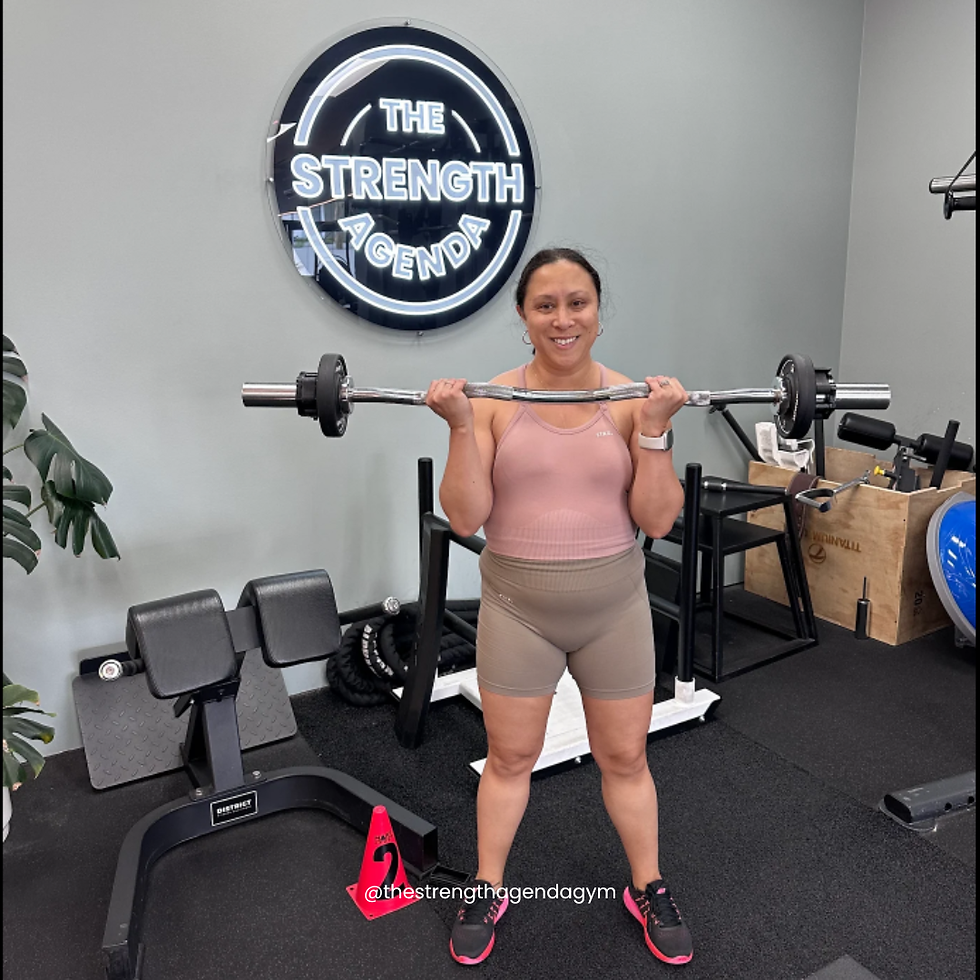
Smart strength training for women in perimenopause isn’t about pushing harder. It’s about progressive overload with appropriate recovery built in. It’s about managing volume intelligently so your training is a stimulus your body can adapt to - not a burden it’s trying to survive.
It also means permission to scale back when life is genuinely throwing curveballs. That’s not weakness. That’s wisdom. Your long-term progress depends on it.
At The Strength Agenda, this is why we don’t just hand you a program and send you on your way. Coaching that accounts for your recovery, your life, and your hormonal context is a different experience entirely.
Sound like the kind of approach you’ve been looking for? Book a short call and let’s talk about what’s actually sustainable for you right now.


Comments